Zollverein: begin before the visitor arrives
The Zollverein Coal Mine Industrial Complex in Essen was a place of work before it became an internationally recognised heritage destination. UNESCO’s record places its surviving industrial fabric within the history of coal production and industrial architecture. That record supplies a foundation for an account: the place mattered because of what happened there, not simply because its structures now make compelling photographs.
A visitor can encounter monumental buildings, interpreted industrial processes and a landscape adapted for new uses. The official Zollverein organisation provides information about its present cultural role and visitor arrangements. Those are current institutional descriptions, distinct from the evidence needed to reconstruct a particular worker’s shift or an individual family’s experience.
Access: managed cultural and heritage complex; individual buildings and tours have separate conditions
What the records establish
The UNESCO listing establishes recognised heritage significance and identifies the industrial ensemble. Operator information establishes what the organisation presents to visitors and how it describes current facilities. Neither source, by itself, represents every former employee. For that, researchers need attributed oral histories, employment records, local archives and other material that may support or complicate the institutional narrative.
This article does not claim that its writer stood in a particular hall, heard a guide, or spoke to a former miner. It is a desk-based account assembled from the linked sources. That disclosure may sound modest, but it is essential. Invented sensory detail would make the piece more vivid at the cost of making its authority false.
The photograph is one kind of evidence
A dated photograph can establish that a visible feature appeared a certain way from a certain viewpoint. It cannot, on its own, establish structural safety, ownership, permission or the cause of damage. Even a recognisable exterior may conceal substantial conservation and reuse behind it. Captions should therefore distinguish a documentary image of the named place from an illustration of a similar setting.
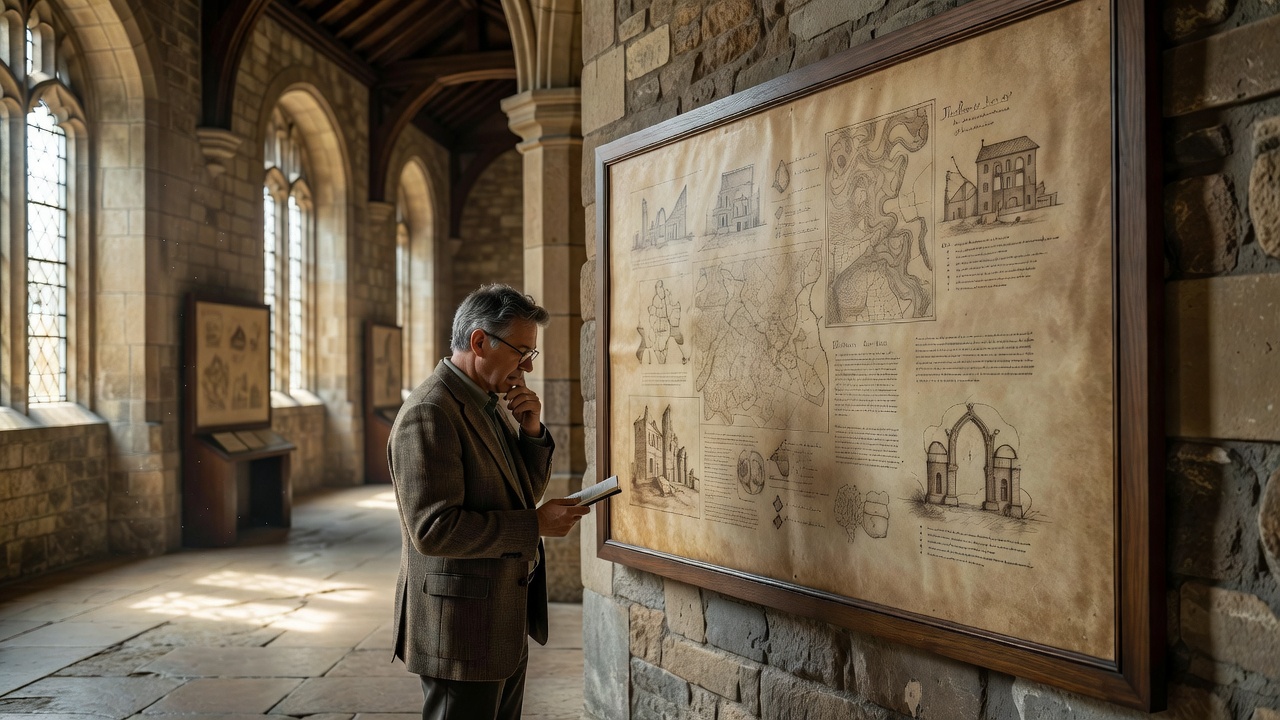
Images on this journal are illustrative unless a caption explicitly establishes a location and documentary context. They must not be used to infer access at Zollverein or any other named property. A photograph of visitors in a heritage hall is not evidence that every industrial interior is publicly accessible.
The boundary between observation and interpretation belongs in the story, not hidden behind it.
Our documentation standard
Hashima: resist the empty-island shorthand
Hashima, associated with Japan’s coal-mining history, is frequently represented through dense concrete structures and the visual impression of sudden abandonment. It forms part of the serial World Heritage property titled Sites of Japan’s Meiji Industrial Revolution: Iron and Steel, Shipbuilding and Coal Mining. A responsible account reads the property’s wider documentation rather than treating an isolated image as a complete history.
The history also requires attention to wartime forced labour and the continuing debate over interpretation and acknowledgement. UNESCO committee documents and the property’s official records are important starting points for that issue. An account that mentions only engineering achievement or visual drama would leave out people whose experiences are central to understanding the place.
Descriptions of a tour or landing are date-specific. Weather, conservation and operating conditions can change access, and permission for a designated visitor area does not imply permission elsewhere. This journal does not provide entry routes, landing instructions or assurances that a trip will operate.
Build an account someone else can check
A documented submission should identify the visit date, the general location and the basis of access. Name public sources, link to the relevant record where possible, and distinguish notes made at the time from later recollection. If a guide supplied a detail, attribute it as a guide’s statement rather than silently upgrading it to an independently verified fact.
Keep uncertainty visible. A remembered sound, a damaged sign or a former worker’s recollection can be important without supporting a broad conclusion. Avoid publishing personal documents, private addresses or information that could expose vulnerable buildings to theft. Documenting a place is not a reason to disclose everything found there.
A correction is part of the record
Accounts improve when a reader can challenge a date, identify an altered room or supply a missing source. Corrections should state what changed and why when the error is substantive. The goal is not to defend an atmospheric narrative; it is to leave a more reliable account of the place and its people.
If you have a documented story, our letter composer helps organise its evidence before you send it. It does not publish a submission, grant permission to enter a site or verify your claims automatically. A careful account begins with those limits intact.