Put the missing connections back
An unused structure can look self-contained because the processes that once explained it have disappeared. Tracks have been lifted, pipes disconnected, loading areas rebuilt. What remains may appear mysterious even when its purpose was practical. The first task is to reconstruct the network: where material came from, where it went, and which other facilities made the structure useful.
Historical maps are especially helpful, but dates matter. A map records a particular stage, sometimes with a delay between survey and publication. Compare more than one edition where possible. A branch line shown on an older plan may have vanished before the building in your photograph was constructed. Aligning those records prevents a persuasive but impossible explanation.
The High Line: a railway’s changed public
New York’s High Line is a prominent example of an elevated freight structure becoming a public landscape. The operating railway served goods movement on Manhattan’s West Side; its later reuse changed the purpose of the route and the people moving along it. The High Line’s own history describes that transformation and the advocacy associated with its preservation.
A park visit can make the surviving structure understandable, but the current experience is not a reconstruction of freight work. Planting, seating, artworks and managed access belong to the park’s later life. The route also sits within a changing neighbourhood. An architectural account should acknowledge that preservation and redevelopment can have consequences beyond the retained steelwork.
Access: public park under operator rules; entrances and hours may change
High Bridge: water before walking
New York’s High Bridge offers another useful reversal of assumptions. A pedestrian crossing today can be read primarily as transport for people, yet its historical role belongs to the Croton water-supply system. New York City’s parks information explains the bridge’s aqueduct heritage. Without that context, the structure’s scale and relationship to the city are easily misunderstood.
Water infrastructure can be particularly difficult to interpret because much of the system is buried or distant. A surviving bridge is only one visible component. Reservoirs, distribution routes and maintenance arrangements form the rest of the explanation. A photograph of the crossing should therefore lead outward to a system diagram or historical map rather than end with the silhouette.
The original service may have stopped. Responsibility for the structure did not disappear with it.
Editorial principle
Battersea: the building and the supply system
Battersea Power Station in London is now associated with a major redevelopment and public destinations. Its earlier identity as generating infrastructure remains central to its architecture. The power station makes little historical sense without fuel delivery, generation, control equipment and the distribution of electricity beyond the building itself.
Reuse can retain a recognisable exterior while changing circulation and interior functions substantially. That is not automatically a failure of preservation; it is a historical change to describe. The important distinction is between evidence of the original operation, fabric retained through conservation, and new work introduced for current users. “Untouched” is rarely a defensible shorthand.
Duisburg-Nord: a landscape with boundaries
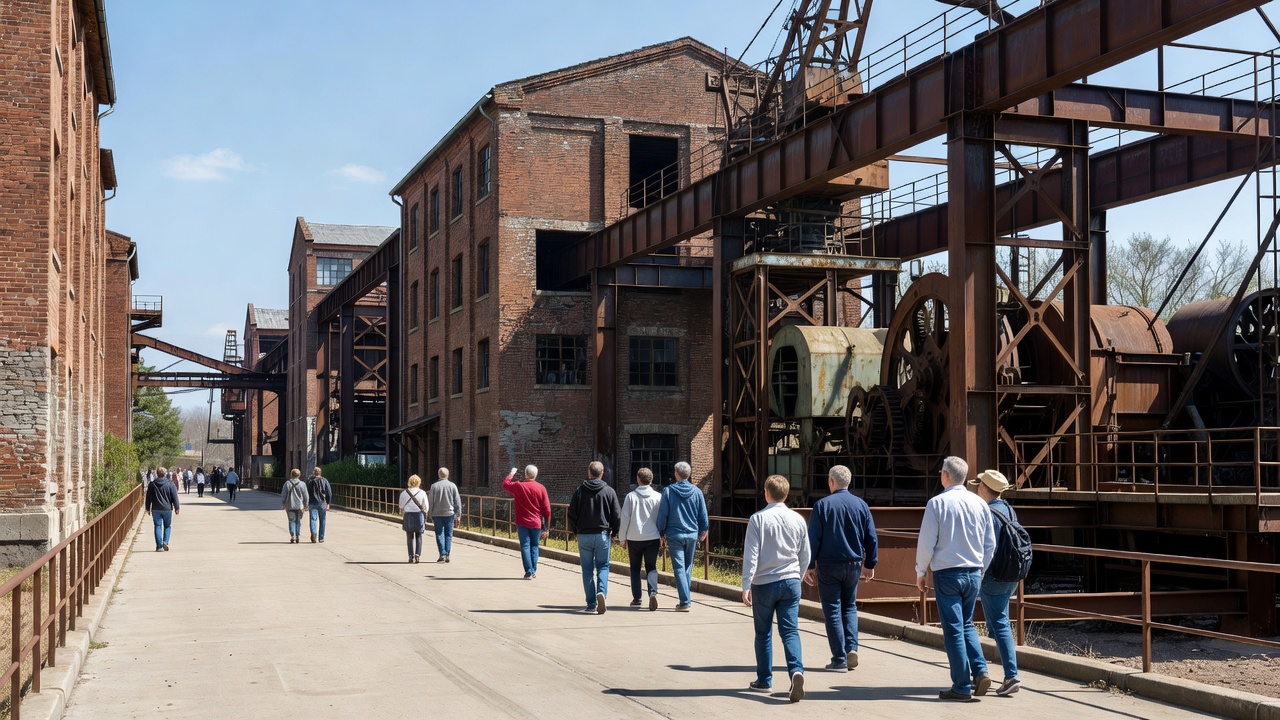
Landschaftspark Duisburg-Nord in Germany incorporates former ironworks into a managed landscape. Its public identity demonstrates that industrial remains can support recreation and interpretation without becoming an unrestricted playground. Some activities and spaces have specific arrangements, while other areas may be inaccessible. A general description of the park cannot substitute for the operator’s current instructions.
The landscape also helps challenge the claim that vegetation means a place has been forgotten. Plant life may be part of a deliberate management approach. Maintenance can be selective, safety measures discreet, and conservation work ongoing. Apparent wildness does not prove absence of care, ownership or legal responsibility.
What “disused” does not tell you
A disused pipe can retain hazards. A redundant railway corridor can cross land with active operations nearby. A tunnel entrance does not disclose its atmosphere, structural condition or connections to live services. These are not puzzles that readers should investigate by entering. Use public records, staffed interpretation and authorised visits instead.
For your own notes, record the original function, the evidence for its end, the present use and the stated access arrangement separately. If one is unknown, leave it unknown. A clear gap in the account is preferable to an invented closure date or an assumption that a neglected-looking facility is inactive. The most informative infrastructure story restores relationships, not routes for bypassing boundaries.